
1. Sign in and choose Supply
Enter your email and open the sign-in link. On your first visit, choose Supply to see inventory tools and the setup checklist. You can change this choice at the top of the sidebar.
2. Set your serving domain
Open Settings › Brand & domains and set your serving domain. Riptide needs this domain before it can generate ad tags. You can also reach this setting from the Home checklist.
3. Add a publisher
Watch: Create your first publisher, a narrated console walkthrough with captions and a written guide.
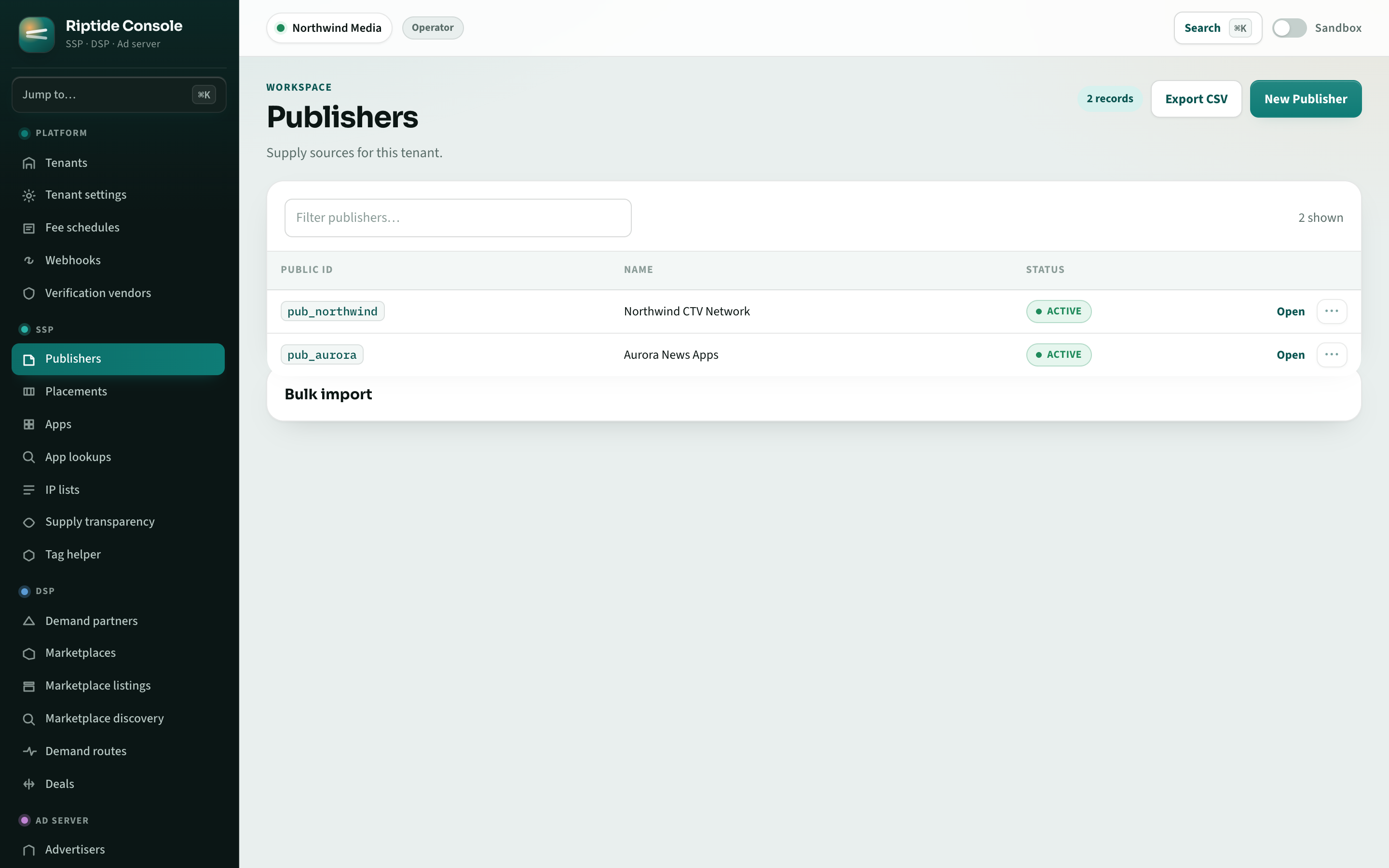
Open Publishers › New publisher and enter a name, public ID and primary domain. Choose a stable public ID because ad tags and ads.txt use it. Select Create and open to continue to the publisher page, where you can manage its sites, apps, placements, supply documents and fees.
4. Add a placement
Watch: Create your first web video placement, with captions and a written guide.
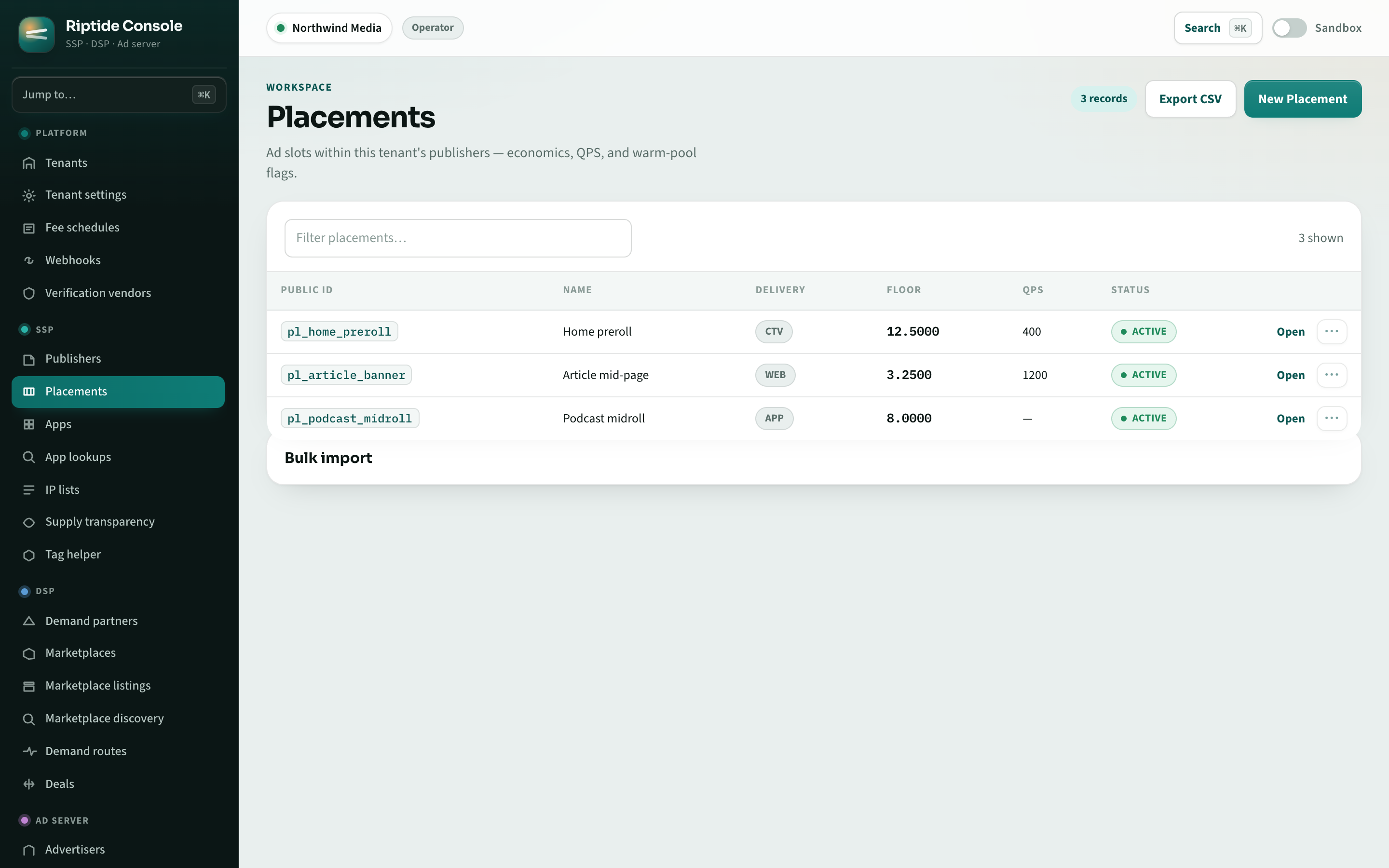
From the publisher's Placements tab, New placement opens the drawer with the publisher already selected. Give it a name and public ID, choose the channel (Web, CTV, App, DOOH), the media and a floor, then Create and open. The placement page is organised as Setup · Pricing & floors · Formats & pods · Demand · Compliance · Tags · Advanced · History.
5. Connect demand
On the placement's Demand tab, select marketplaces and direct routes. The preview shows the available routes, their floors and fees, and any direct line items eligible to serve on this placement.
6. Copy the tag and send a test request
Copy the VAST tag URL or OpenRTB endpoint from the Tags tab. Use the macro list to configure the parameters your player supplies. Send test request checks the placement and explains each decision step without serving or billing an ad. After you place the tag, the first live request marks "Tag placed" on Home. The first impression marks "First ad served".
Verify ads.txt
Open the publisher's Ads.txt tab to copy the entries to publish, then run verification. Under Brand safety, ads.txt & sellers.json shows verification results and document changes.
What's next
Connecting programmatic demand? Read the buyer guide. For direct campaigns, follow the advertiser guide. For local development, use the local stack guide.
Get help with your first ad request
Tell us which player or application you are connecting, the ad format, and the response you receive. The serving probe can help you inspect the response before testing playback.