
Resources

Trace the partners and fees behind an impression

Use partner and fee records to compare routes to inventory and reconcile charges for delivered ads.

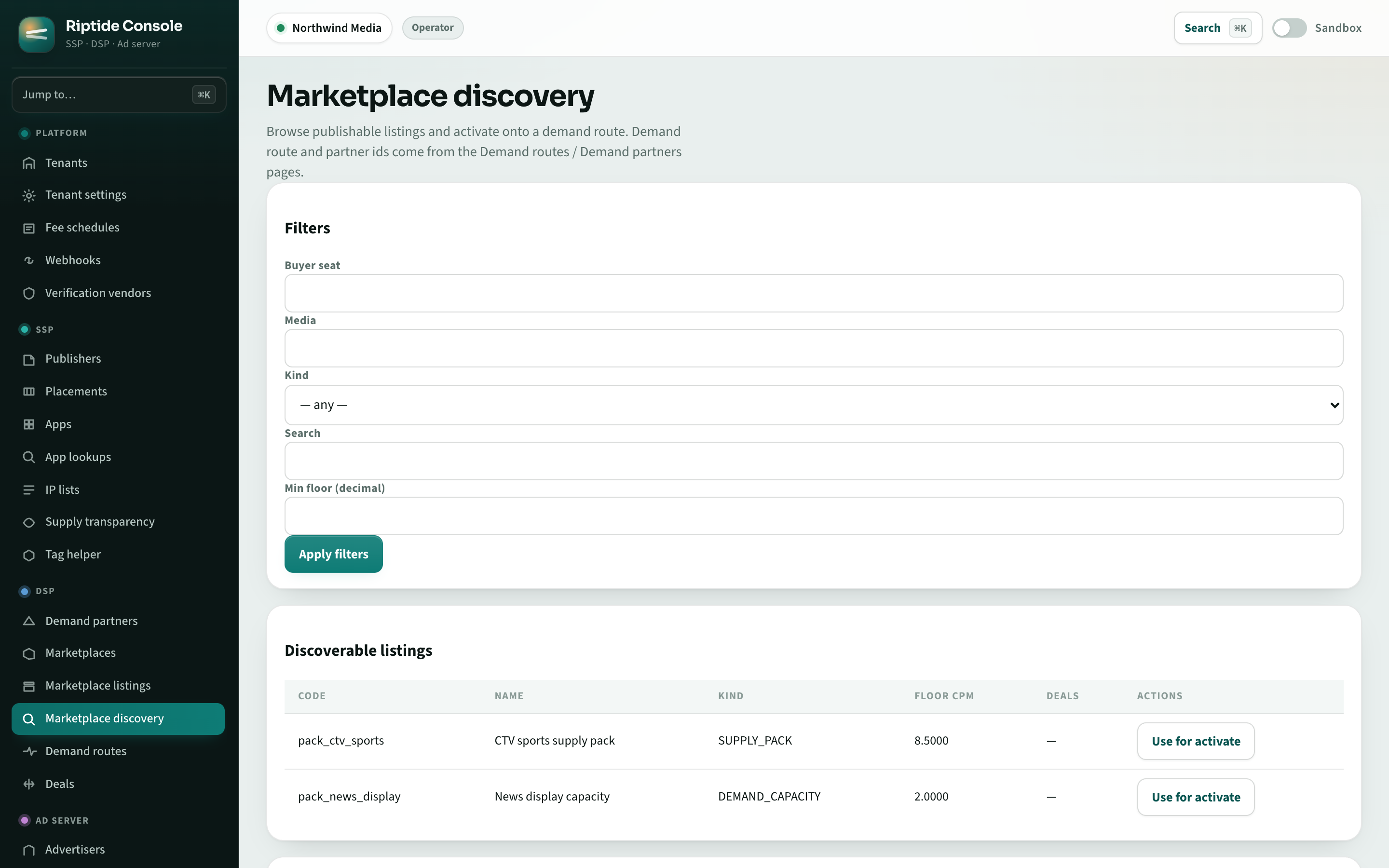
Riptide Console marketplace discovery with supply packs and activations
Open Lake ยท Discovery

Why fees can be hard to reconcile

An impression may pass through several businesses before an ad is delivered. Each can charge a fee, provide a service, or both. When their records use different identifiers or leave out part of the transaction, a publisher and buyer can struggle to establish who participated and what each party earned.

Open Lake addresses this with discoverable partner listings, agreed terms, and receipts tied to recorded fills. Participants can compare routes to inventory and check the recorded charges against their agreements.

What a path receipt records

A path receipt lists the partners involved in a fill, their roles, and the fees recorded for that impression. It uses the platform's decision and pricing records. A software product that contributes a verification check, signal, or model decision can have a fee line even if its vendor is outside the chain of inventory resellers.

A receipt provides a readable transaction record. Signed path attestations provide separate evidence when a federation requires cryptographic verification. Operators should use the evidence required by their partner agreements and check discrepancies against the underlying records.

Participants connect through listings for supply, demand, buying services, or installable products. They negotiate terms when required and activate the agreement before it can affect delivery. Some listings allow immediate activation. Inventory owners can set floor prices and limit the number of intermediaries allowed in a path.

Compare the cost of each relationship

A direct connection and a curated package can serve different needs. A buyer may pay for access, data, optimization, or service that it would otherwise have to provide itself. Showing those fees makes it easier to compare the total cost with the results.

Open Lake records applicable fees for platform services, demand partners, vendors, and other participants. Operators can compare receipt lines with fee schedules and investigate differences during reconciliation. Participants still choose their partners and negotiate their own prices.

Platform operators can offer both private curated packages and discoverable listings. They choose which relationships to publish and which require negotiated terms.

How participants use it

Publishers can review the routes to their inventory, choose demand partners, and apply floor prices and limits on intermediaries. Existing curated and direct relationships can continue alongside new listings.

Buyers can compare direct inventory access with buying services and curated packages, then review the fees recorded for delivered impressions.

Demand operators and vendors can publish buying services or software products with defined pricing. Eligible tenants can discover and activate those offers.

Platform operators can present those options under their own brand. Agents can help manage listings and proposals under configured identity, permission, approval, and spending controls.

Control what others can see

Listing visibility determines which tenants can discover an offer. Private marketplace packages can stay private, and negotiated terms remain subject to the parties' access rules. Publishing a listing does not grant another tenant unrestricted access to your inventory, audiences, or commercial data.

Tenant isolation and request privacy controls still apply. Participants can use receipts within a private relationship while restricting wider discovery, or publish listings broadly and require an approved proposal before activation.

Using Open Lake

Riptide provides APIs for listings, proposals, activations, receipts, product installation, and settlement. The Open Lake guide explains how to discover a listing, agree terms, activate it, and inspect a recorded fill.

Access depends on tenant permissions and listing visibility. Software product publication requires vendor access and operator-verified conformance results. Receipts need recorded traffic, and settlement needs applicable fee schedules, partner agreements, and configured finance services.

Begin with a limited workflow in your own tenant. Use the integration examples to inspect configuration and records before enabling paid activity.

Plan your partner connections

Discuss your listings, commercial terms, and receipt requirements with the Riptide team.