
How white-label ad serving works
A platform builder or agency licenses an ad-serving product, adds its own branding, and offers it to publisher or advertiser customers. The underlying provider may host the software, or the agreement may allow a private deployment. White-label describes how the product is presented to customers; it does not determine who runs the infrastructure.
Why teams use it
White-label software gives a team an existing serving engine to build its business on. The team can focus on customer relationships, inventory, buying services, and integrations. It still needs to configure the platform, support customers, and verify that the product meets its technical and commercial requirements.
What to check with a provider
- Which domains can carry your brand, including ad serving and the admin console?
- Where will the provider's name appear, if attribution is required?
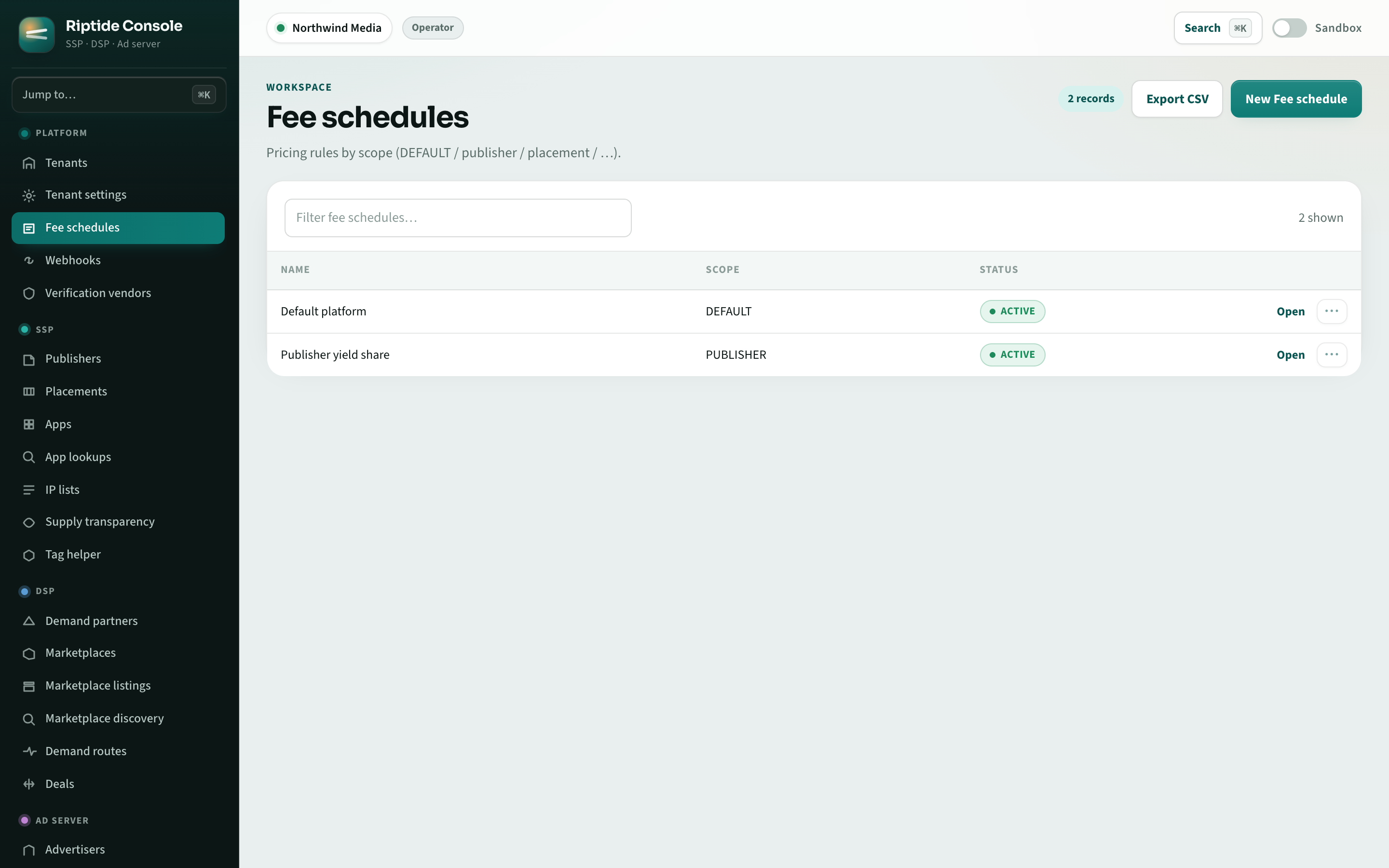
- Can you set customer fee schedules, and what does the provider charge?
- How are customer data and permissions isolated?
- Which APIs, integrations, and custom decision rules are supported?
- Who operates the infrastructure and handles incidents?
Extending a white-label platform
Branding support alone says little about how much of a platform you can customize. Riptide provides admin APIs, MCP tools, serving plugins, and decision-model integrations. Review the supported interfaces and limits against the behavior you need. The white-label comparison covers the main questions to ask during evaluation.