
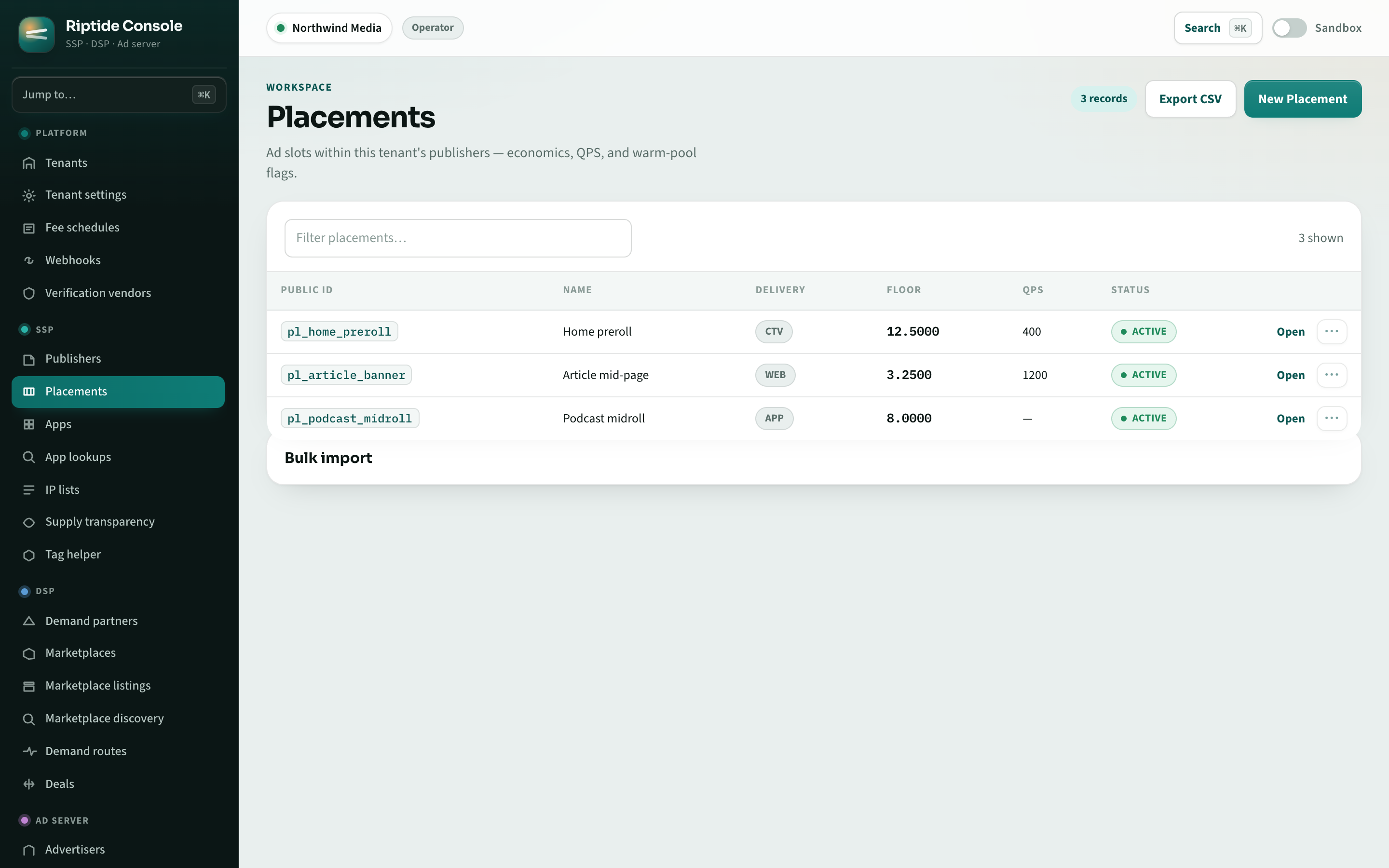
SSP: selling inventory
A supply-side platform helps publishers sell impressions to buyers. It manages placements, floor prices, and deals, connects demand sources, and runs or participates in auctions. Publishers use its reports to track fill rate and revenue.
DSP: buying inventory
A demand-side platform helps advertisers and agencies buy impressions. It uses campaign goals, targeting, budgets, and bid rules to decide which opportunities to buy and how much to bid. Reports show spend, delivery, and campaign results.
Ad server: managing delivery
An ad server selects and delivers ads, tracks delivery events, and applies campaign rules such as pacing and frequency caps. A publisher can use it to deliver direct campaigns and house ads alongside programmatic demand. An advertiser can use an ad server to manage creatives and track campaigns delivered through different publishers.
How the roles work together
A direct campaign and a programmatic bid may both be eligible for the same impression. The platform needs to apply their priorities, prices, targeting, and delivery commitments consistently. When separate systems handle these decisions, operators need to coordinate their configuration and reconcile the results.
Riptide compiles that configuration into a shared serving plan. Its auction evaluates eligible direct campaigns, programmatic bids, and deals together. You can use the SSP, DSP, and ad server roles as your platform requires.